Looking for the deeper dive? Pair this with our Complete Guide to Countertops in Oakland (2026) for material specs, install sequence, seam placement, and what we refuse to do.
Updated for 2026. Here's what we've been installing more than anything else over the past year — what's working, what isn't, and the material picks we're standing behind in 2026.
Flooring: GAIA Impala SPC Luxury Vinyl
This was our top seller by a wide margin.
GAIA Impala SPC
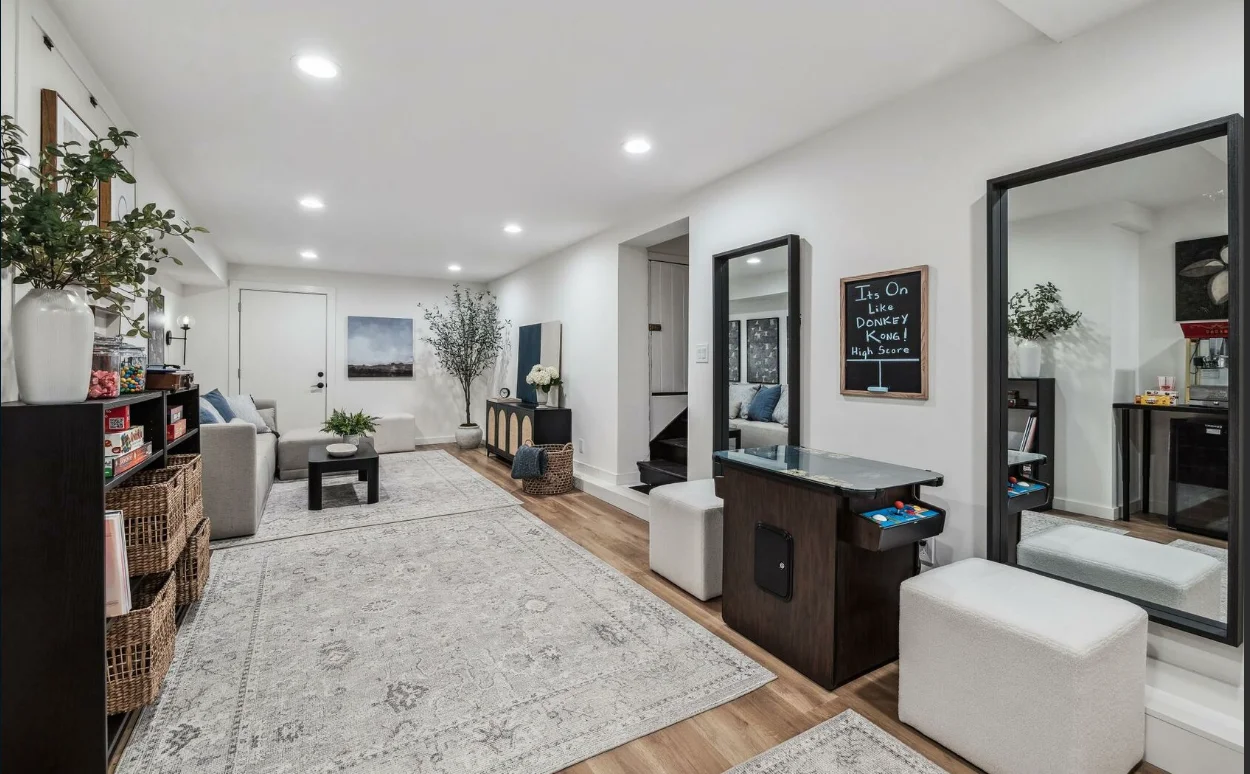
GAIA Impala has a built-in IXPE underlayment and a ceramic bead finish that resists UV damage and staining. It's waterproof, clicks together with the Uniclic system, and looks like real hardwood.
But here's why clients actually chose it: it looks premium, handles moisture without warping, and installs clean.
Why Installation Quality Matters More Than the Product
You can buy the best flooring on the market and still end up with a floor that clicks, separates, or feels uneven underfoot. Six months after install, something feels off. The product didn't fail—the subfloor prep did.
The other thing clients care about more than they expect: transitions and elevation changes. Where the new floor meets existing tile in the bathroom. Where it steps down into a sunken living room. Where it hits the slider door threshold. These details make or break how the finished floor feels. Done wrong, you get awkward lips and visible height differences. Done right, it flows.
Countertops: Pure White Quartz with Undermount Sink
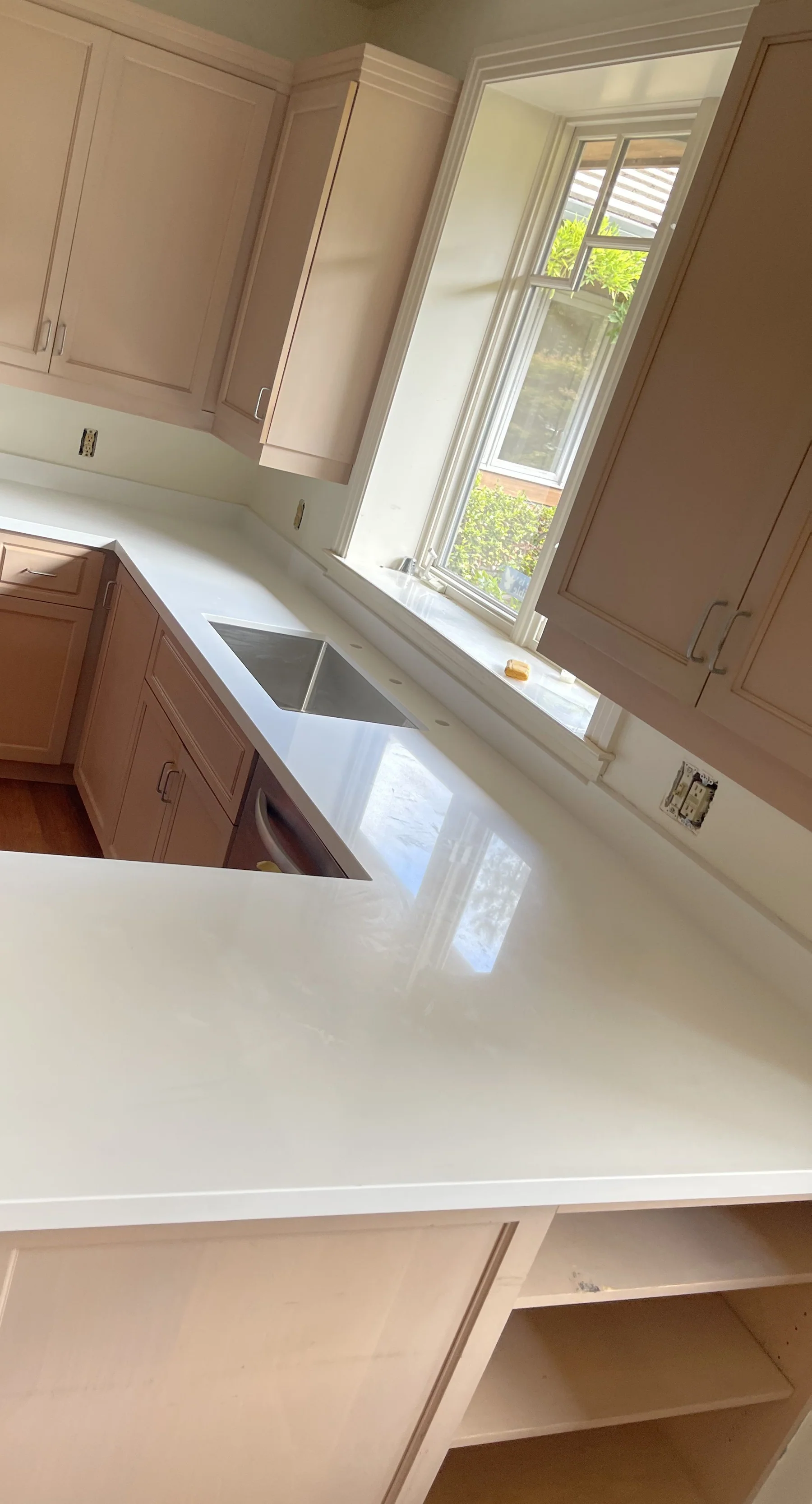
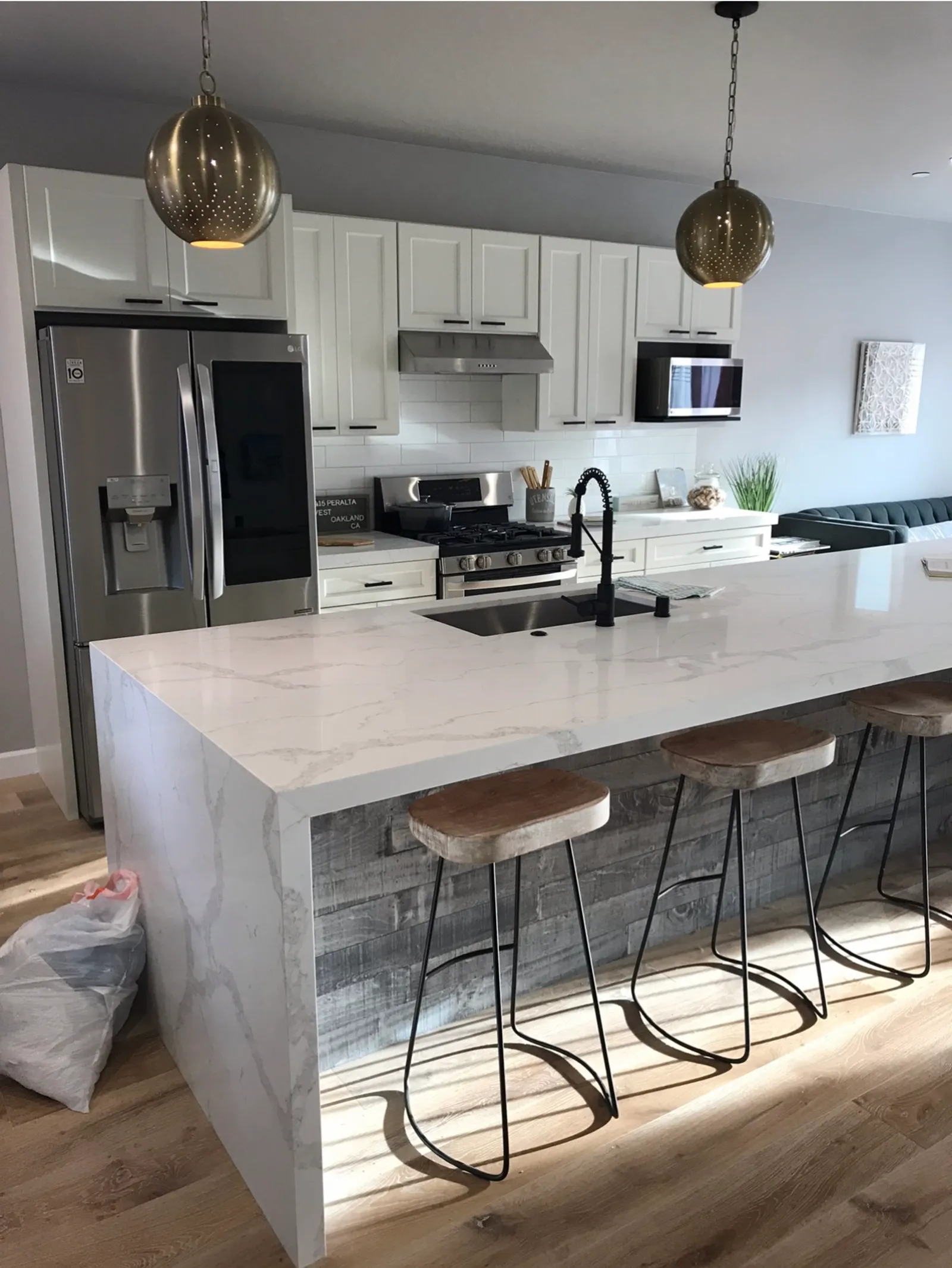
For countertops, pure white quartz dominated. Clean, bright, and nearly indestructible.
Quartz Our Pick
$60–100/sqft
Granite
$50–120/sqft
Marble
$75–200/sqft
Quartz is engineered stone—ground quartz bound with resin. It doesn't need sealing like granite or marble. It doesn't stain from coffee or wine. And because it's harder and more consistent than natural stone, it's less likely to crack during transport and installation.
That last part matters more than people realize. Natural stone slabs—especially marble—are fragile. A hairline fracture during fabrication or a bad bump during install can crack a slab. With quartz, the risk drops significantly. That means fewer delays, fewer replacement costs, and more predictable jobs.
What Does a Real Countertop Job Actually Cost?
Here's a baseline for a single prefab slab (106" standard) with one sink cutout and a 4" backsplash—the minimum scope for a countertop replacement:
Single Slab Countertop Replacement — ~$4,100
| Item | Cost |
|---|---|
| Demo of existing counter | $700 |
| New plywood underlayment | $200 |
| Prefab quartz slab | $700 |
| Sink cutout | $500 |
| Undermount sink | $350 |
| Installation | $1,500 |
| 4" backsplash (96" length) | $150 |
| Total | ~$4,100 |
And that's before faucet, soap dispenser, or any plumbing beyond the sink.
Most average kitchens need 2–3 prefab slabs to cover all the counter space. So a typical full kitchen counter replacement with demo, new quartz, undermount sink, and basic backsplash runs $8,000–12,000 depending on layout and linear footage.
The Sink Setup Everyone Wanted
Almost every countertop job this year included the same configuration:
- 30" square stainless steel undermount sink — single bowl, clean lines, no lip sitting on the counter
- Single-hole faucet — less clutter, easier to clean around
- Soap dispenser — built into the counter, no bottle sitting on the sink
- Air gap or countertop disposal button — depending on whether there's a dishwasher or garbage disposal
This setup became our default recommendation because it works. The square sink maximizes usable space. The single-hole faucet keeps the counter clean. The built-in soap dispenser and disposal button reduce countertop clutter. It's a small thing, but clients notice the difference every day.
Why These Two Won
Both products share the same qualities: they look premium, they're durable, and they install predictably.
That last part is the contractor's perspective, but it benefits the client too. When materials behave consistently, jobs stay on schedule. Fewer surprises, fewer callbacks, fewer "we need to order another slab because this one cracked."
Thinking about a remodel?
We'll walk through your space, discuss your goals, and give you a realistic estimate — no pressure, no sales pitch.
Related reading
- The Complete Guide to Countertops in Oakland (2026) — materials, install sequence, seam placement, and what we refuse to do.
- How Much Do Kitchen Countertops Really Cost in Oakland? — real pricing breakdown for the countertop materials above.
- The $4,200 Kitchen Flooring Mistake — the GAIA Impala LVT install we had to fix, and the baseboard rule every Oakland contractor should follow.